
Second COVID-19 vaccine jab still potent 12 weeks after first dose – GHS
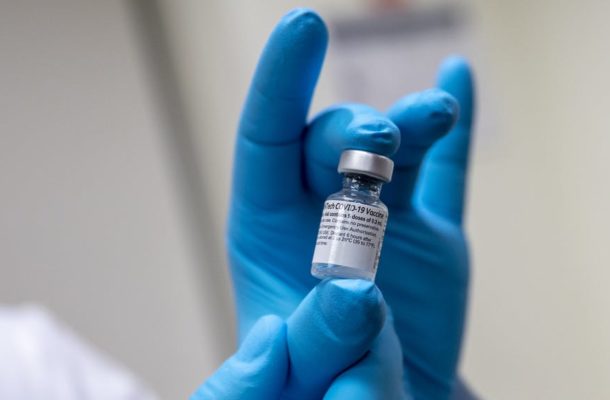
The Ghana Health Service (GHS) has once again allayed fears of Ghanaians about the delay in the procurement of COVID-19 vaccines for the second phase of the inoculation exercise.
This comes after some Ghanaians who had received their first jabs raised concerns over the delay in taking their second jabs in the eight week period given.
A total of 755,686 people have received their first jabs of the AstraZeneca COVID-19 vaccines, with the Greater Accra Region having the highest number of inoculated persons. The fear of these people stems from the suspension of exportation of the AstraZeneca vaccines from India, which raises the possibility that the second phase of the program might not be rolled out in Ghana.
But the Coordinator for New Vaccines at the Ghana Health Service, Kwame Amponsa-Achiano says there is no cause for alarm.
In an interview with Accra-based Citi Fm, teh Coordinator said “some Ghanaians have the wait and see attitude. If you ask them to come in eight weeks [for their second dose], they will come in twelve weeks so it was not as if the eight-week [deadline] was cast in iron.”
He explained further that there is what is termed as the “minimum interval”, in the vaccination process which means “if you have to give multiple doses, you should give the second and the third dose within a certain minimum. If you go below that minimum then the vaccine is not likely to give any support to the first dose. So even beyond the 12 weeks, it is still going to be potent.”
Vaccination extension
The Director-General of the GHS, Dr. Patrick Kuma-Aboagye, had earlier announced a revision in the GHS’ initial vaccination policy for those who have taken the first dose to receive their second jabs in 12 weeks, instead of eight weeks.
This, he said, is a result of the efficacy of the first dose, explaining that the first jab has about 76% protection for about 90 days, which coincides with the revised 12 weeks.
“WHO has done a lot of studies and it shows that if you do it before the four weeks or before two weeks, there is no benefit; but between two, four, eight and twelve weeks is the best time to do it and even though you would have lost some percentage of the antibodies, it’s still enough to protect you.
“The efficacy of one dose is about 76 percent protection for just about 90 days which coincides with the 12 weeks. Subsequently, they have not done the next stage. A lot of work is being done now, and I’m sure when it’s concluded we’ll see how long the first dose really protects you before you become vulnerable,” he explained.






Popular News
No trending posts found.