Oppong Nkrumah exposes BoG’s US$10.36bn forex operations amid media blackout
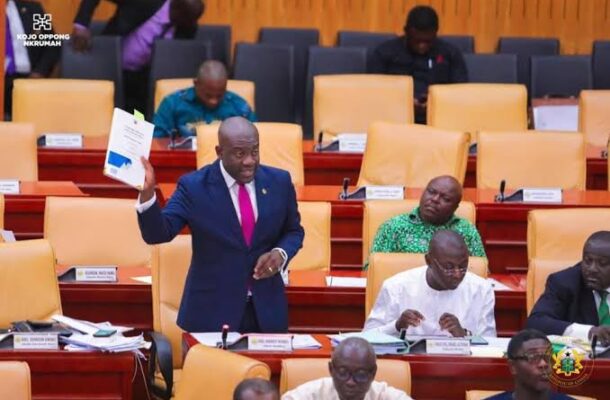
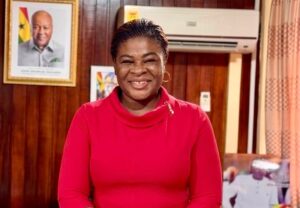
The controversy surrounding Parliament’s closed-door engagement with Bank of Ghana (BoG) Governor Dr. Johnson Asiama deepened on Wednesday after Member of Parliament for Ofoase-Ayirebi and Ranking Member on Parliament’s Economy and Development Committee, Kojo Oppong Nkrumah, disclosed portions of the Governor’s written responses to parliamentary questions, insisting there was no justification for denying the media access to proceedings.
Mr. Oppong Nkrumah argued that the Governor’s responses had already been published on Parliament’s Order Paper before the Committee of the Whole sitting, making the information public. He therefore questioned why the NDC Majority insisted on excluding journalists from covering the engagement, describing the decision as inconsistent with Parliament’s commitment to transparency and accountability.
“These are the answers that the Majority seeks to deny the press an opportunity to report to the people of Ghana about. What is there to hide, for which reason the media is being denied access to follow these proceedings?” Mr. Oppong Nkrumah asked after the Minority suspended its participation in protest against the media blackout.
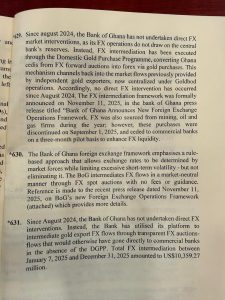
According to the written responses submitted by the Governor, the Bank of Ghana disclosed that it has not undertaken any direct foreign exchange intervention using the country’s official reserves since August 2024.
Instead, the central bank explained that its foreign exchange operations have been conducted through the Domestic Gold Purchase Programme (DGPP), under which proceeds generated from the gold purchases are converted into foreign exchange through structured gold transactions before being channelled back into the market.
The Governor stated that the arrangement allows the Bank to replace foreign exchange flows that were previously supplied by independent gold exporters before those transactions became centralised under GoldBod operations.
According to the response, “Since August 2024, the Bank of Ghana has not undertaken direct foreign exchange market interventions as its FX operations do not draw on the central bank’s reserves. Instead, FX intermediation has been executed through the Domestic Gold Purchase Programme.”
The Governor further explained that the current foreign exchange framework was formally introduced through a Bank of Ghana policy announcement issued on November 11, 2025, under the title “Bank of Ghana Announces New Foreign Exchange Operations Framework.”
The central bank indicated that apart from gold-related foreign exchange flows, it also sourced foreign exchange from mining, oil and gas companies during part of 2025.
However, that arrangement was discontinued on September 1, 2025, when the responsibility was transferred to commercial banks under a three-month pilot programme aimed at improving liquidity within the foreign exchange market.
Responding to another parliamentary question, the Governor explained that the Bank’s foreign exchange operations are now guided by a rule-based framework designed to allow market forces to determine exchange rates while limiting excessive short-term volatility.
According to the Bank, foreign exchange is now intermediated through transparent spot auctions conducted without exchange rate guidance or transaction fees, to maintain orderly market conditions rather than directly influencing exchange rates through reserve sales.
The Governor referred Parliament to the November 11, 2025 policy framework document for further details regarding the operation of the new system.
Perhaps the most significant disclosure contained in the Governor’s responses relates to the scale of the Bank’s foreign exchange operations.
According to the figures submitted to Parliament, total foreign exchange intermediation undertaken through the Domestic Gold Purchase Programme between January 7, 2025 and December 31, 2025 amounted to US$10.359 billion.
The Bank stressed that these transactions did not constitute direct foreign exchange intervention financed from the international reserves but rather represented the intermediation of foreign exchange generated through gold export proceeds under the Domestic Gold Purchase Programme.
Mr. Oppong Nkrumah maintained that these responses underscore why Parliament should have allowed journalists and the Ghanaian public to witness the Governor’s oral explanations and the follow-up questions that Members of Parliament intended to ask.
He argued that the issues under discussion—including the source of foreign exchange, the structure of the Bank’s intervention programme and the volume of foreign exchange channelled into the market—are matters of enormous public importance because they directly affect the value of the cedi, inflation, investor confidence and the broader macroeconomic outlook.
The Minority had also intended to question the Governor further on the Bank’s recent audited financial statements, its reported operating losses and the credibility of certain figures contained in the accounts.
However, following the decision by the NDC Majority to support a closed-door Committee of the Whole sitting, the Minority suspended its participation and staged a walkout, insisting that Parliament should not conduct discussions on matters of such significant public interest away from public scrutiny.



Popular News
No trending posts found.