
Ghana’s perennial floods: Cleaning drains alone will not save us
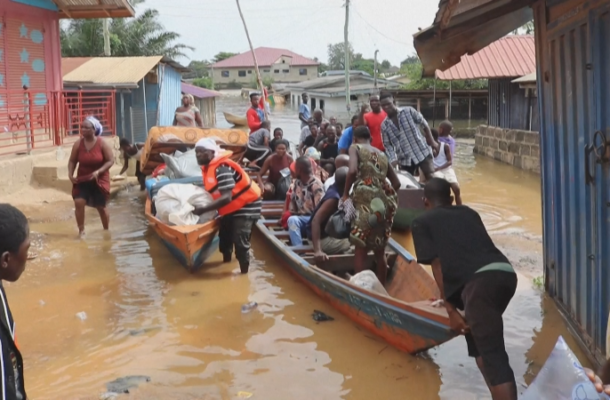
Every year, the story is the same. Heavy rains fall, communities are submerged, lives are lost, businesses are disrupted, and thousands of people are displaced. We blame choked drains, plastic waste and poor sanitation. While these are certainly contributing factors, I believe the conversation about Ghana’s perennial floods, particularly in Accra, is far more complex.
As a Ghanaian and a Natural Resources Manager, I cannot entirely agree with the popular view that flooding in Ghana is caused solely by human activities such as indiscriminate dumping of waste. That explanation captures only part of the problem.
The reality is that we cannot discuss flooding without acknowledging three interconnected issues: climate change, environmental degradation and engineering failures.
Climate change has altered rainfall patterns across the world. Ghana is no exception. Rainstorms have become more intense, more unpredictable and capable of overwhelming drainage systems that were designed decades ago. At the same time, the destruction of wetlands, forests and natural water retention areas has removed nature’s ability to absorb excess rainfall before it reaches our communities.

We must also remember one important fact: nature is always more powerful than man. Rivers and natural waterways have existed for centuries. They follow their own course and reclaim their paths whenever they are obstructed. We underestimate the force of water at our own peril. No amount of annual sanitation exercises alone can stop floodwaters if we continue to ignore the science of hydrology and the realities of climate change.
That said, we cannot excuse ourselves from responsibility. Our attitude towards the environment remains deeply troubling. Every day and especially under the cover of darkness, people dump refuse into drains. Some households and businesses illegally channel liquid waste directly into storm drains. Others build across waterways and wetlands with little regard for the consequences.
Equally worrying is the weak enforcement of our environmental laws. Ghana has regulations governing sanitation, waste disposal and physical planning, yet violations often go unpunished. Laws that are not enforced become mere suggestions.
Another uncomfortable truth is that our waste management system remains incomplete. We collect waste from our communities, but an important question remains unanswered: Where does all that waste ultimately go?

As a nation, we still lack sufficient engineered landfill sites that meet international environmental standards. Recycling remains limited despite the enormous quantities of plastic, paper, organic waste and metals generated every day. Without investing in waste segregation, recycling and modern disposal facilities, we are simply moving waste from one location to another rather than solving the problem.
Government must also revisit the extensive studies and technical recommendations produced over the years by the Hydrological Services Department and other engineering institutions. Ghana has no shortage of reports or technical expertise. The challenge has always been implementation. Flood management must become a long-term national engineering programme rather than a seasonal emergency response whenever disaster strikes.

One issue that receives little public attention is the enormous amount of sand filling our drains. Recent videos circulating on social media, showing young men opening covered drains in parts of Accra, reveal a disturbing reality. Many drains are not only clogged with plastic bottles, polythene bags and refuse. They are also heavily filled with sand and silt.
This raises critical questions. Where is all this sand coming from? Are our roads, construction sites and uncovered surfaces being properly managed? Are erosion control measures working? Even if every piece of plastic were removed today, drains filled with sand would still have significantly reduced capacity to carry stormwater.
We also need honesty in how we approach national clean-up exercises. Too often, these events become opportunities for photographs and television coverage rather than sustained environmental action. We gather for a few hours, cameras roll, public officials sweep for the lenses and then everyone leaves. In many instances, heaps of collected waste remain on pavements and roadsides long after the event has ended.
Cleaning campaigns have their place, but they cannot substitute for permanent systems, disciplined citizens and accountable institutions.

The solution to Ghana’s flooding crisis therefore requires a comprehensive approach built on three pillars.
First, citizen discipline. Every Ghanaian must understand that protecting the environment begins with individual responsibility. Illegal dumping, building in waterways and poor sanitation practices must stop.
Second, strict enforcement. Environmental laws must be applied consistently without fear or favour. Institutions responsible for sanitation, planning and environmental protection must be empowered and held accountable.
Third, engineering and climate resilience. Ghana must invest in modern drainage infrastructure, engineered landfill sites, recycling facilities, erosion control, wetland restoration and climate adaptation measures. Future infrastructure must be designed to withstand increasingly intense rainfall associated with climate change.
Floods are not merely a sanitation problem. They are an environmental, engineering, governance and climate challenge.
If we continue to treat them as only a waste management issue, we will continue to witness the same tragedy every rainy season.
The time has come to move beyond annual clean-up campaigns and embrace science, long-term planning and responsible citizenship. That is how we build resilient cities and protect lives, livelihoods and our environment.
The responsibility belongs to all of us.
Feature by Emmanuel Appiah Larbi
Plantation development and projects manager .
Member of
Ghana environmental advocacy group.
[email protected]





Popular News
No trending posts found.